No app onboarding friction
Sanctuary Signal helps church security teams message individuals, roles, or everyone on duty from phones volunteers already carry. See product tour or read the product overview.
Comparison Guide
Group texts for church security teams
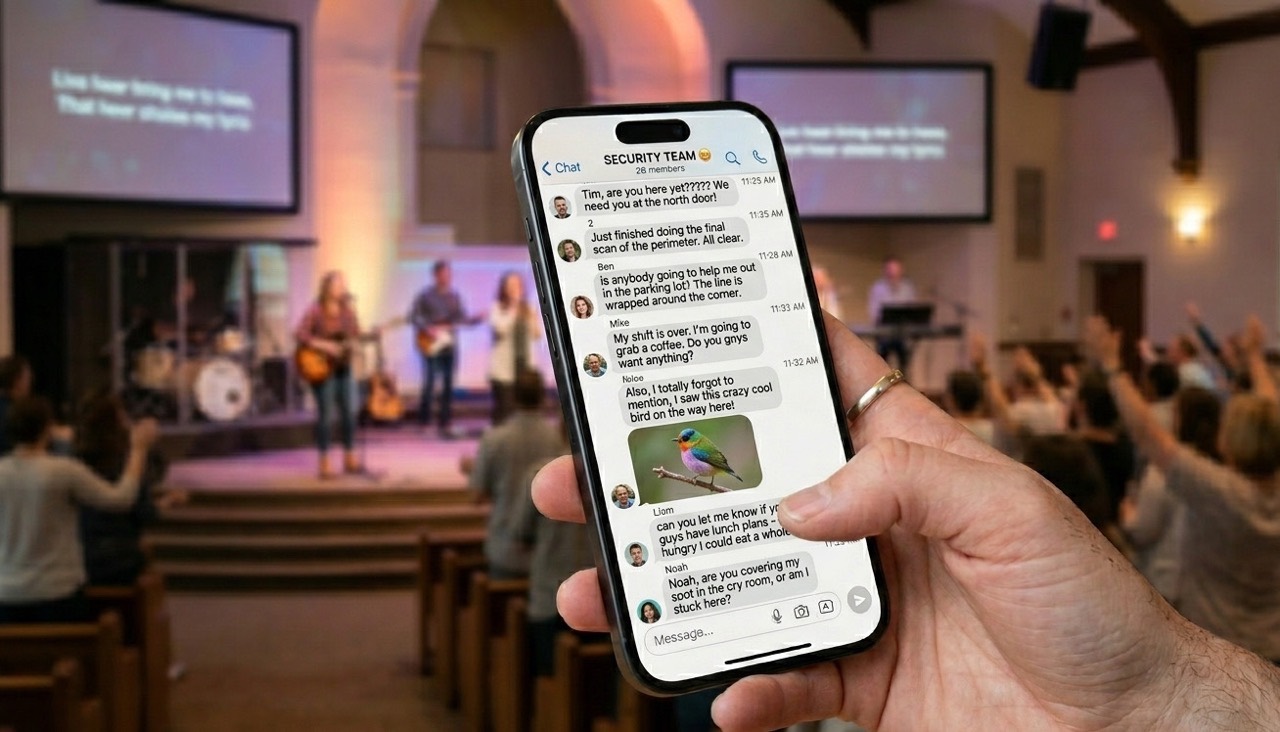
Group texts are easy to start, but they rarely stay clean as teams rotate.
They work for quick communication, then become noisy when duty state and broadcast authority are not explicit - exactly when you need calm most.
What Group Texts Do Well
Familiar to almost every volunteer
Fast setup for small stable teams
What Usually Breaks
Short reads tied to specific failure patterns (routing, broadcasts, fatigue, accountability).
Comparison guides (broader category reads)
Some destinations repeat on purpose: the row above is symptom-focused articles. Below is category-level comparison (for example mass-notification appears in both rows because broadcast control is both a common gap and a whole product class to evaluate).
Migration tips for teams stuck in a thread
Moving off a group text is less about technology and more about social habit. Start by naming the top three failures you feel every month: missed messages, duplicate alerts, or unclear duty coverage. Then pick a pilot window where leadership agrees to route safety coordination through a single channel while other ministry chatter stays where it is. Volunteers adopt what leaders model; if supervisors still drop ad-hoc texts outside the agreed path, the old thread will resurrect overnight.
Give people a short vocabulary card they can laminate: CHECKIN, STATUS, how to request a supervisor broadcast, and where to send photos if policy allows. When the vocabulary is shorter than your old list of exceptions, you are on the right track. Use volunteer onboarding notes and use-case playbooks to reinforce the change with stories, not lectures.