No way to filter who's actually on-duty
Group Chat For Church Security Teams: What Breaks
Teams rotate, volunteers mute the noisy group chats - any workflows lose duty clarity and escalation discipline.
Casual messaging tools are easy, free and familiar, but church security operations need tighter routing and authority controls.
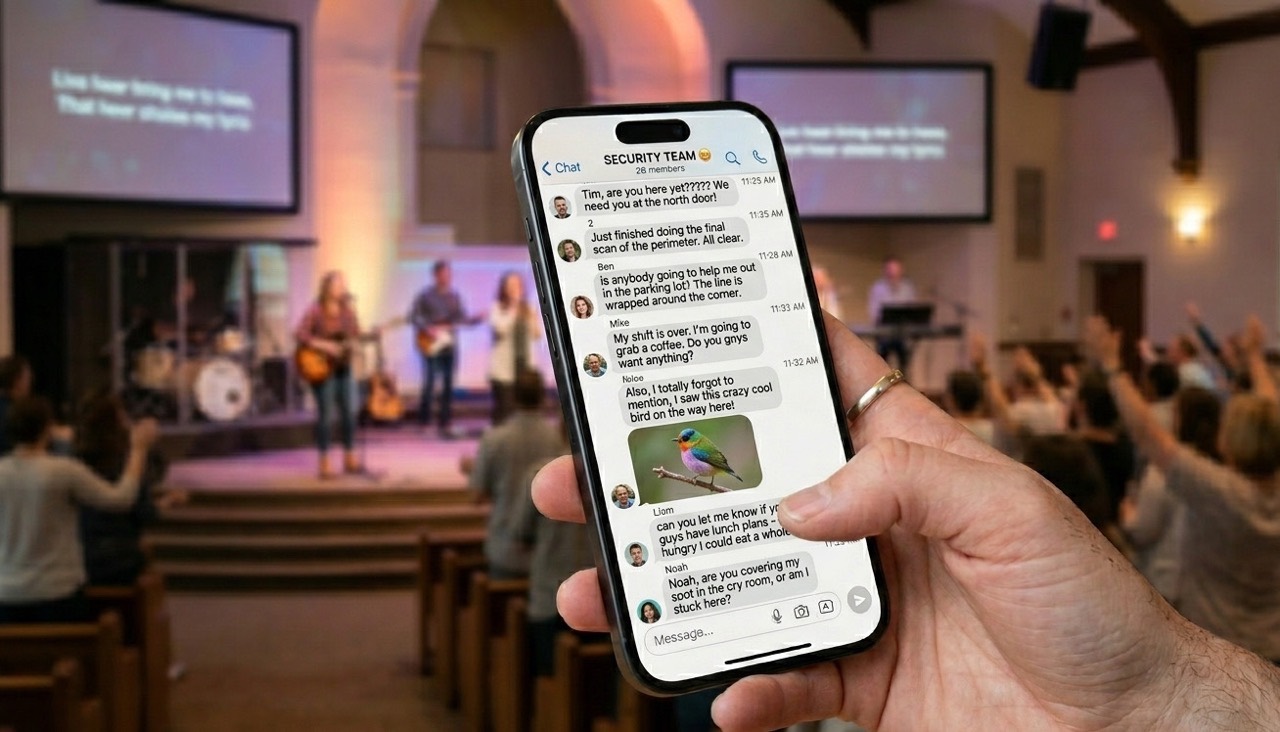
What Commonly Breaks
Messages for everyone whether they need them or not
Broadcast authority is missing at best
After-action review is non-existent
Contact information required to see sender names
See Built for volunteers for related guidance on duty, privacy, group chat limits, and when TEXT is the right channel.
Signals that it is time to change channels
Group chat is not evil. It is the wrong default when duty state, broadcast authority, and review trails matter. If your team already compensates with side policies (“only post in the thread when you are on duty,” “do not @everyone,” “send medical notes to this other list”), those are clues that the tool is stretching past its design. The cost is cognitive: volunteers must remember exceptions instead of following a short vocabulary.
Structured SMS does not remove judgment. It makes the common path obvious: CHECKIN, STATUS, @Name routing, and controlled supervisor broadcasts. When something rare happens, you still escalate, but you are not fighting the baseline behavior of a consumer chat app. Compare consumer chat tradeoffs and open group text patterns if you need language for leadership conversations about switching or hybrid models.