Voice / Push-to-Talk
Fast live coordination between active responders in motion.
Comparison Guide
Push-to-talk is immediate. Structured SMS is discreet and duty-aware.
Many teams use radios and voice tools for live response while adding SMS routing to reduce broad chatter and improve post-service accountability.
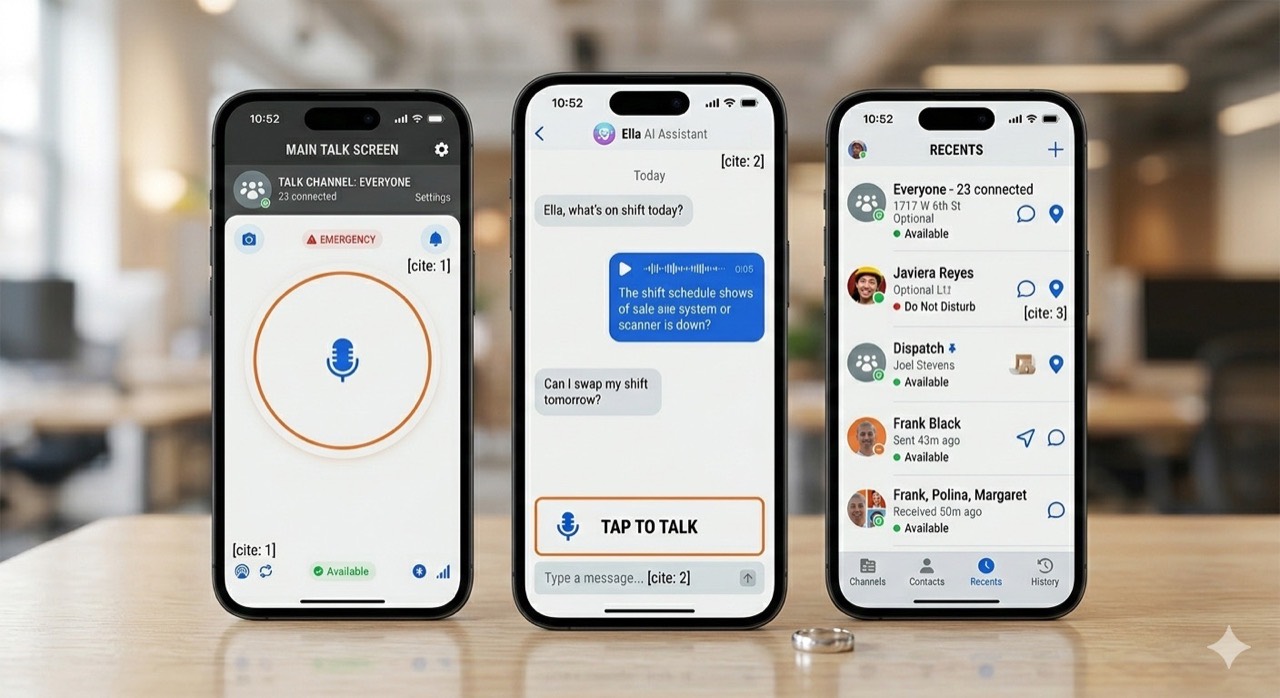
Fast live coordination between active responders in motion.
Quiet role-based routing, duty visibility, and cleaner history for review.
If your church wants a one-for-one swap away from handheld radios, Zello is often the first tool teams try: same push-to-talk muscle memory, headsets and speaker-mics, and immediate voice between people who are already moving.
That pattern works when a small set of trained responders stays on channel, keeps transmissions short, and treats the app like a shared simplex or repeater pair. For many campuses it is a credible step up from aging radio inventory without buying new RF hardware.
Layering structured SMS alongside that voice channel still helps for duty state, quieter updates during worship, and summaries after service - but the voice half is where Zello earns its keep.
Traditional radios do not depend on your church's Wi-Fi, consumer cellular data plans, or app store installs the way a push-to-talk-over-IP tool does. That difference shows up fastest in the places Sunday teams actually stand.
Zello rides IP networks. In practice that means reliable Wi-Fi indoors, or strong mobile data where Wi-Fi is weak. Basements, stair cores, metal roof lines, and dense auditoriums are the same pockets where voice apps stutter first.
If your policy assumes "it works everywhere on campus like our old radios did," validate with walk tests on game day traffic, not only a quiet Tuesday afternoon.
Licensed or business-band radios carry voice over RF paths your team already understands. They do not need a login per device, a session that drops when the OS updates, or a backhaul path through the public internet for every syllable.
For a fuller radio-vs-SMS tradeoff write-up, see radios vs SMS dispatch on the comparison hub.
SMS is a best-effort mobile-network service, but for volunteers it often behaves more predictably than a live voice stream when the bar on the phone is barely there.
On modern phones, outbound SMS is usually a small handshake with the carrier: you get a clear sent state, a visible failed to send state, and a prompt to retry when the handset could not complete delivery. That is different from push-to-talk, where a "connected" icon can hide micro-dropouts listeners only notice as garbled audio.
Payloads are tiny compared with sustained VoIP or PTT-over-IP, so they tend to ride out marginal service more often than a voice packet stream that needs continuous bandwidth both directions. Nothing is a magic guarantee in every basement - but teams routinely find that CHECKIN, STATUS, and short directives still move when a voice app would not stay up.
Structured routing on top of SMS (who is on duty, who may broadcast, @Name handoffs) is what turns those small messages into Sunday discipline instead of another group thread. For the full product picture, start with platform overview and the product comparison, or return to comparison guides.